Today's lesson: Researching solutions
Do Now
On your whiteboards, answer these from memory.
"Why should I bother recycling? It doesn't matter if I do anything to help the planet."
- I agree or I disagree with this statement because...
Small actions add up. Individuals are one of the three groups taking action, alongside governments and organisations.
- What is one question you should ask about a source before trusting it?
Who made it? Why did they make it? Can I check it somewhere else? Is anything missing?
- How can you tell if information you find online is ?
Reliable information comes from a source you can name and check, like an organisation, a government site or a news site that other sources agree with.
What we are learning
By the end of this lesson, you will be able to explain solutions being used to address a global issue.
To know
- I know that sustainability issues include climate change, pollution and deforestation.
- I know that governments, organisations and individuals are taking action to help.
- I know that explaining solutions helps others understand what can be done.
Key words Tap one to see what it means.
I do: watch how I research an issue
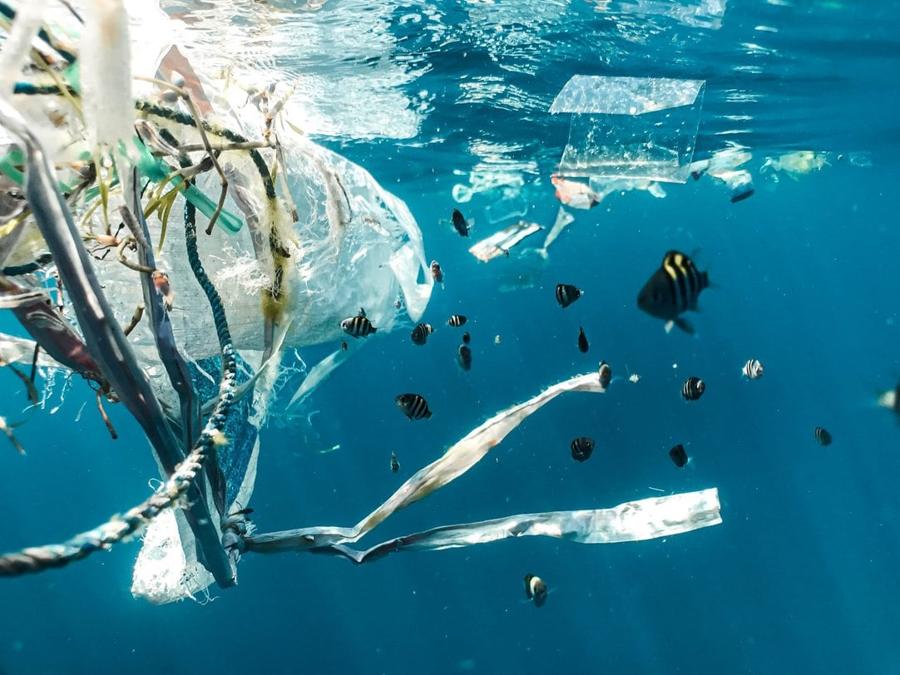
The issue: plastic pollution in the oceans
There is too much plastic in the ocean and it is destroying the of sea creatures.
What is being done, and by who?
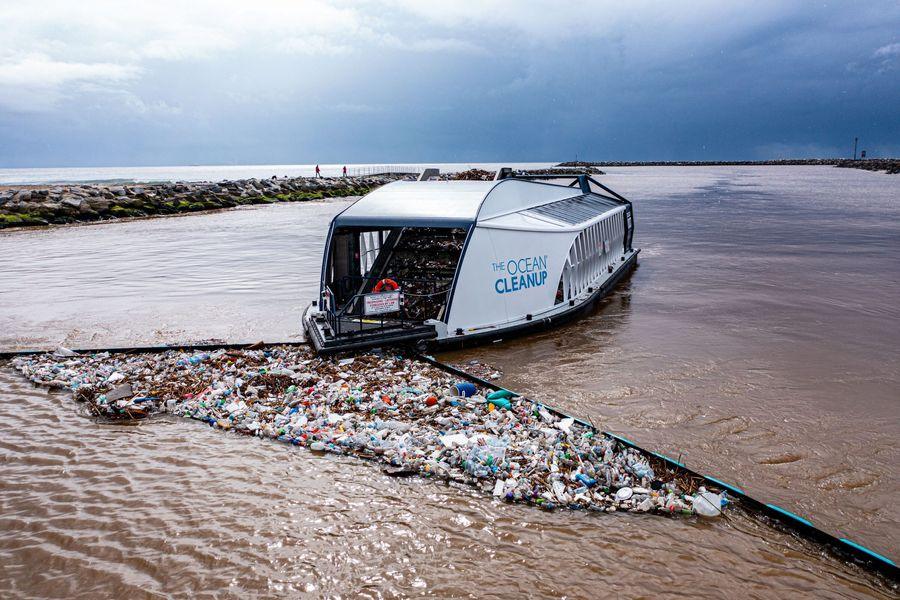
The Ocean Cleanup is a non-profit . It builds new technology to collect plastic from the oceans. It also tries to catch plastic in rivers and streams before it reaches the ocean, to stop more pollution.
Watch: how The Ocean Cleanup worksVideo on YouTube
Three groups are taking action
We do: deforestation
Talk with your partner about each question. Then tap to see some ideas.
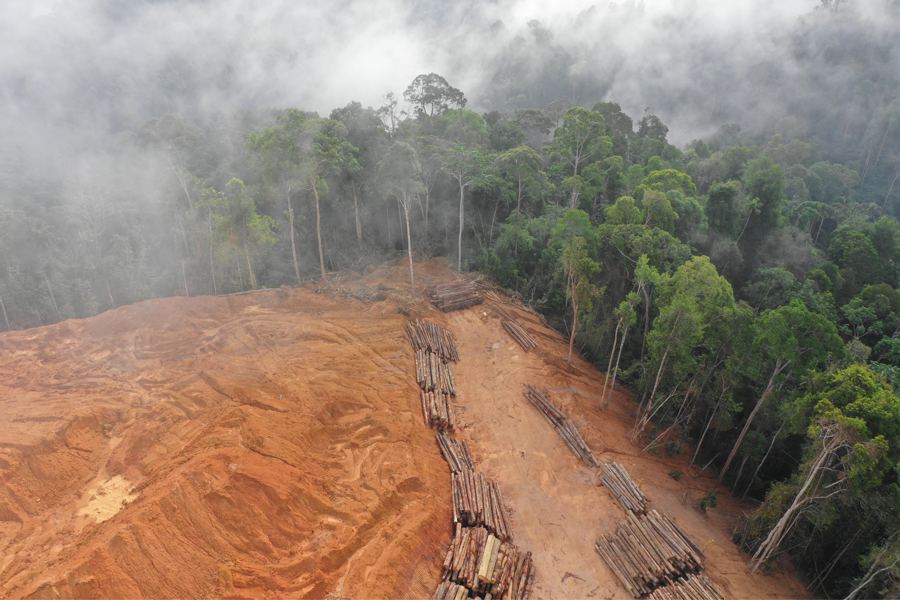
- Why do we need to protect our forests?
Forests are home to many animals and plants. When trees are cut down, animals lose their homes, and fewer trees means more carbon dioxide stays in the air.
- What can be done to prevent or deforestation?
Protect areas of forest so they are not cut down, plant new trees, and use less paper or choose paper from forests that are looked after.
- How can I find out what is already being done to fight against deforestation?
Search safely with Swiggle or Kidtopia. Look at an organisation's own website, like Rainforest Trust, then check the facts on a second site.
You do: choose your issue
With your group, decide on your chosen issue. Then think about these questions.
- Why is your issue important?
- What can be done to prevent it?
- How can I find out what is already being done to fight against my chosen issue?
- How can I trust the source?
Issues to choose from
- Ocean plastic pollution
- Deforestation
- Litter and waste
- Air pollution
- Habitat loss
- Energy use and fossil fuels
- Water shortage
- Food waste
What your teacher is looking for
- Are your definitions clear and accurate?
- Are you using the key words?
- Are your solutions clear and accurate?
Use Swiggle or Kidtopia to help with your answers and to give you ideas for your diorama. You can work in a group, but everyone completes their own plan.
Your Eco-Box (your diorama): the brief
Over the next few weeks you will design and make a about a problem that is harming our planet. Choose an issue you feel passionate about.
A diorama is a mini world inside a box. It can include figures, objects and landscapes, realistic or imaginative settings, and a story or message.
Add labels and captions that describe and explain, so someone looking at it understands it without you. In a few weeks you will present your diorama to your parents.
You can work in a group, but everyone completes their own plan. You will build it next lesson, so bring your box and materials from home. If you don't bring it, you can't use it.
Key words Tap one to see what it means.
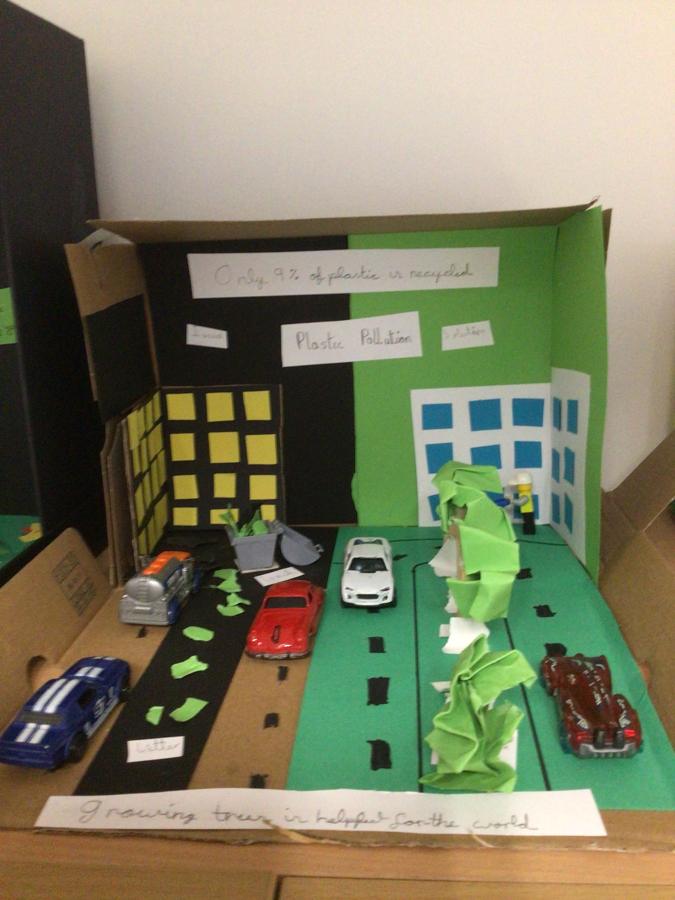
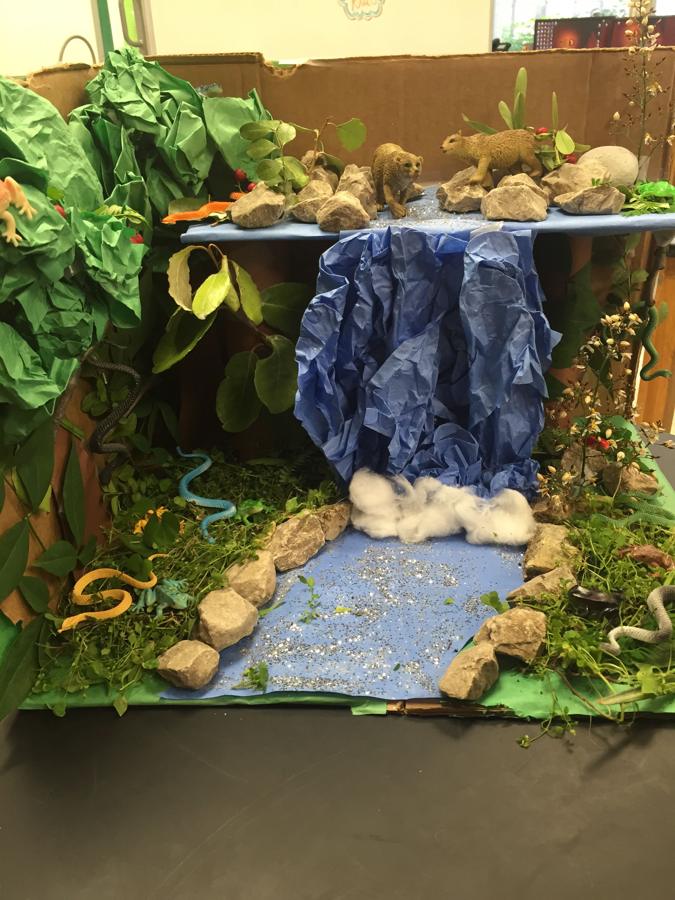
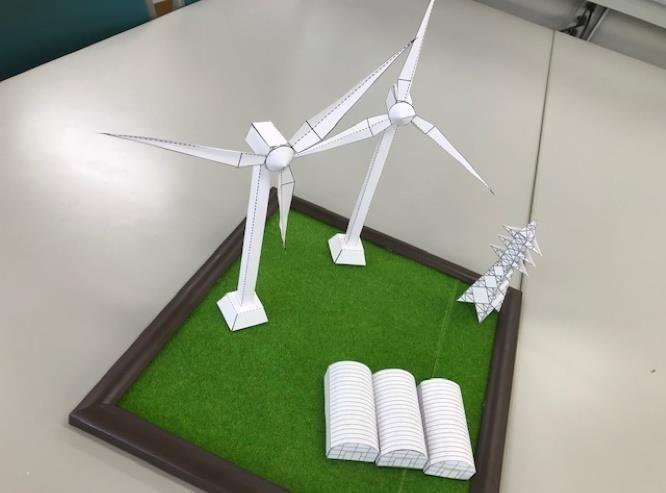
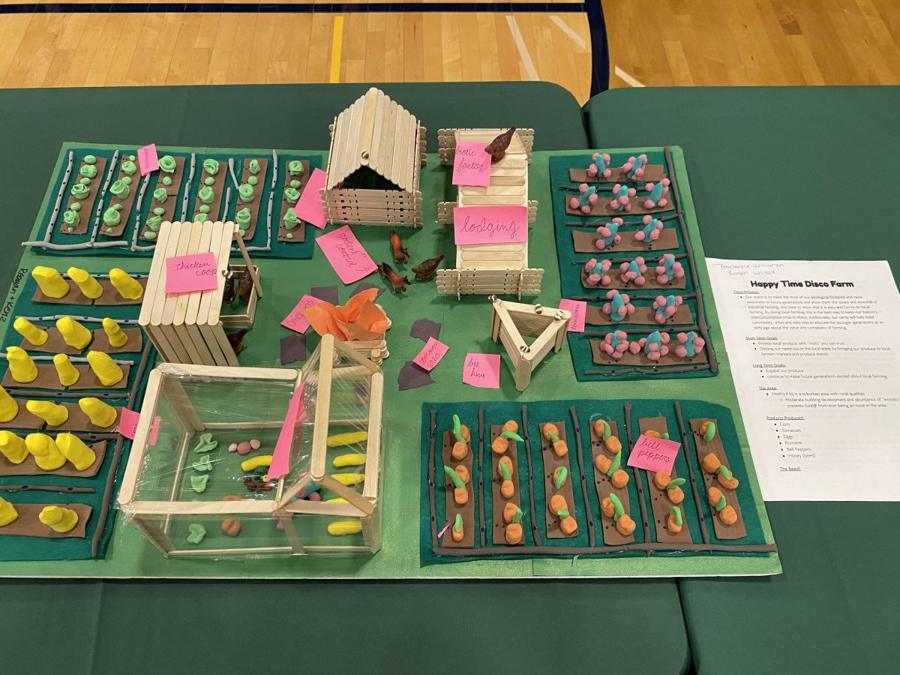
Dioramas made by last year's pupils. Notice the labels and the two different sides.
Who are you working with?
Part 1: My research
A whole example: The Ocean Cleanup
- My issue
- Plastic pollution in the oceans.
- What is the problem?
- There is too much plastic in the ocean and it is destroying the habitat of sea creatures.
- Who is helping, and what are they doing?
- The Ocean Cleanup is a non-profit . It builds new technology to collect plastic from the ocean, and catches plastic in rivers before it reaches the sea.
- How does it help?
- It removes plastic that is already there and stops some more from arriving, so sea creatures have a safer home.
- Can I trust my source?
- Green. I know who made it: it is the organisation's own website. It might only show the good side (), so I checked the facts on a second site.
Would the simpler version help? It gives you sentence starters to get you going. You can switch back at any time.
1My issue, and why I chose it
Tap the issue you chose.
A government, an or people like you.
Can I trust my source?
Name the site or organisation.
Can I trust my source?
6How much do I trust it?
Who made it? Can I check it somewhere else? Is it ?
Part 2: My Eco-Box design
Sketch both sides and label what each thing represents. A viewer should understand it without you explaining.
Side 1: the problem
How the issue looks now.
Side 2: the solution
What is being done, or could be.
Moving Beyond Justify and design
Part 3: What I need to bring
You will build it next lesson. If you don't bring it, you can't use it.
My box
What type of box will you use?
What I need to bring
| Item I will bring | What I will use it for | Remove |
|---|
Ideas (tap to add)
Classroom supplies you can use: paper, card, glue, paint, scissors, colouring pencils.
Finish: Check and send
2 or 3 sentences for your parents to read next to your diorama.
What is something YOU can do today to help with your sustainability topic?
Tip: tap the microphone on the iPad keyboard to say your answer instead of typing it.